
Follow the stories of academics and their research expeditions
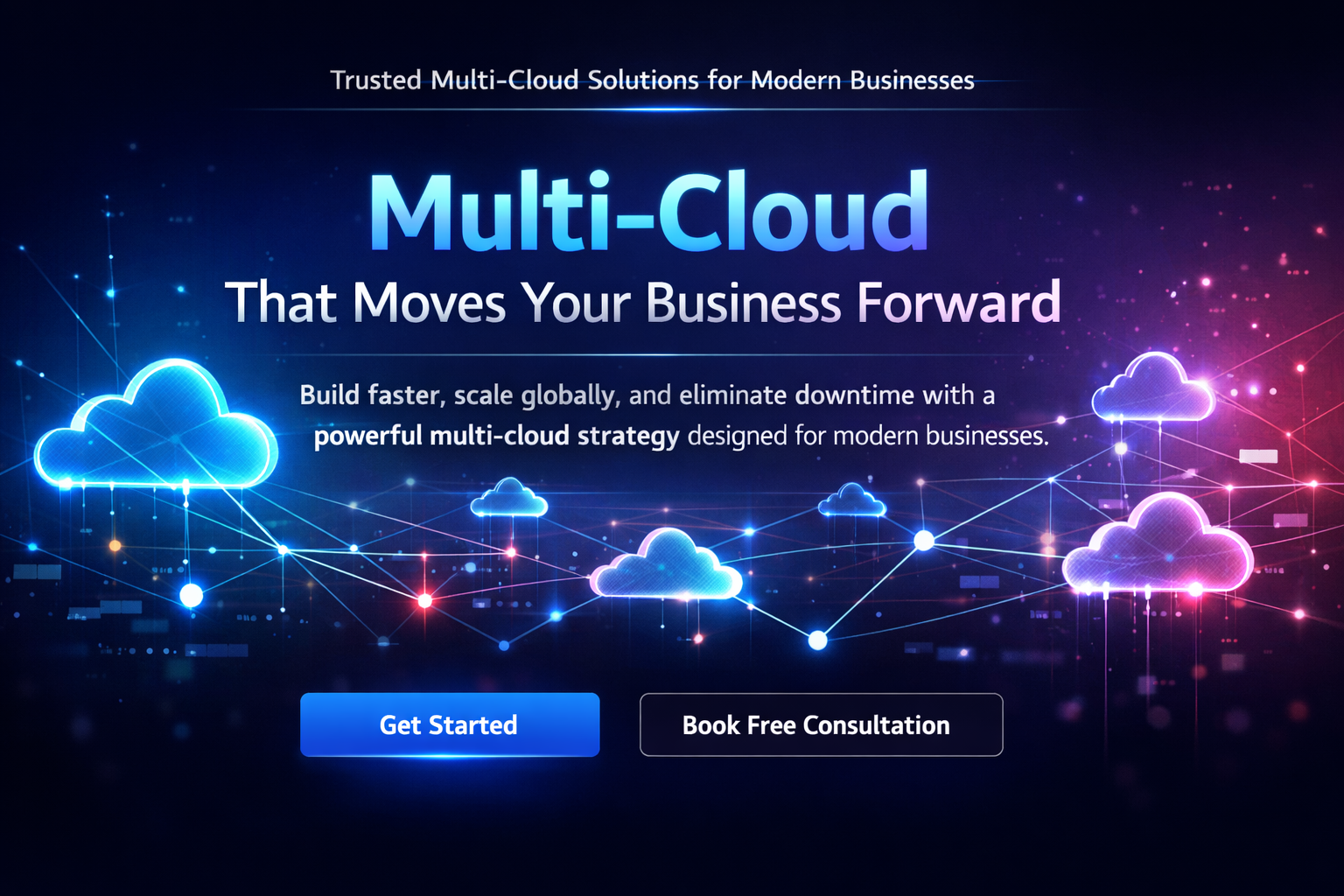
Multi-Cloud Strategy in 2026: The Future of Scalable and
Resilient IT Infrastructure
Introduction
In today’s fast-evolving digital world, businesses are no
longer relying on a single cloud provider. Instead, they are adopting a multi-cloud
strategy to improve flexibility, reduce risk, and enhance performance.
Multi-cloud is not just a trend—it has become a necessity for organizations
aiming to stay competitive in 2026 and beyond.
With the rise of cloud computing giants like Amazon Web
Services, Microsoft Azure, and Google Cloud Platform, companies now have more
choices than ever. But with choice comes complexity. This is where multi-cloud
steps in as a powerful solution.
In this blog, we will explore everything you need to know
about multi-cloud—from basics to benefits, challenges, real-world use cases,
tools, and future trends.
What is Multi-Cloud?
A multi-cloud strategy refers to the use of two or
more cloud computing services from different providers. Instead of depending on
a single vendor, businesses distribute their workloads across multiple cloud
platforms.
For example:
This approach allows organizations to choose the best
services from each provider based on their needs.
Multi-Cloud vs Hybrid Cloud
Many people confuse multi-cloud with hybrid cloud, but they
are different:
|
Feature |
Multi-Cloud |
Hybrid Cloud |
|
Definition |
Multiple cloud providers |
A combination of private + public cloud |
|
Focus |
Vendor diversity |
Infrastructure integration |
|
Example |
AWS + Azure + GCP |
On-premise + AWS |
In simple terms:
Why Multi-Cloud is Important in 2026
The demand for multi-cloud is growing rapidly due to several
reasons:
1. Avoid Vendor Lock-In
Relying on a single cloud provider can be risky. Multi-cloud
helps businesses avoid being dependent on one vendor.
2. Improved Reliability
If one cloud provider fails, applications can still run on
another cloud.
3. Better Performance
Organizations can choose data centers closer to users for
faster performance.
4. Cost Optimization
Different providers offer different pricing models.
Multi-cloud allows businesses to pick cost-effective options.
5. Regulatory Compliance
Some industries require data to be stored in specific
regions. Multi-cloud makes compliance easier.
Key Benefits of Multi-Cloud
Flexibility
Businesses can choose the best tools and services from each
provider.
Enhanced Security
Distributing data across multiple platforms reduces the risk
of a single point of failure.
High Availability
Applications remain available even during outages.
Cost Efficiency
Optimizing workloads across clouds reduces unnecessary
expenses. Global Reach
Multi-cloud enables businesses to serve customers worldwide
with low latency.
Challenges of Multi-Cloud
While multi-cloud offers many benefits, it also comes with
challenges:
1. Complexity
Managing multiple platforms can be difficult.
2. Security Issues
More platforms mean more security configurations.
3. Cost Management
Without proper monitoring, costs can increase.
4. Skill Gap
Teams need expertise in multiple cloud platforms.
5. Data Integration
Moving data between clouds can be complex.
Multi-Cloud Architecture
A typical multi-cloud architecture includes:
Key Components:
1. Containers & Kubernetes
Containers help run applications consistently across clouds.
Kubernetes is widely used for orchestration.
2. API Management
APIs connect services across different clouds.
3. Identity & Access Management (IAM)
Ensures secure access control across platforms.
4. Monitoring Tools
Tools like dashboards help track performance and usage.
Popular Multi-Cloud Tools
Here are some tools widely used in multi-cloud environments:
Infrastructure
Management
Container
Platforms
Monitoring &
Observability
Security Tools
Real-World Use Cases
1. E-commerce Platforms
Large e-commerce companies use multi-cloud to handle high
traffic and ensure uptime.
2. Banking & Finance
Banks use multi-cloud for compliance and data security.
3. Healthcare
Healthcare organizations store sensitive data across secure
cloud platforms.
4. Media & Entertainment
Streaming services use multi-cloud for content delivery
worldwide.
5. Startups
Startups use multi-cloud to scale quickly and reduce
dependency on a single vendor.
Multi-Cloud Best Practices
To successfully implement a multi-cloud strategy, follow
these best practices:
✅ 1. Define Clear Goals
Understand why you need multi-cloud.
✅ 2. Use Automation
Automate deployment and management processes.
✅ 3. Focus on Security
Implement strong security policies across all platforms.
✅ 4. Monitor Costs
Use tools to track and optimize spending.
✅ 5. Train Your Team
Ensure your team has the necessary skills.
Multi-Cloud Security Strategy
Security is a critical part of multi-cloud environments.
Key Strategies:
Cost Optimization in Multi-Cloud
Managing costs in multi-cloud requires careful planning.
Tips:
Future Trends of Multi-Cloud

Join Huzefai, a trusted IT training institute offering AI, Multi-Cloud, Networking, Linux, DevOps and Automation courses with real-time labs and expert trainers.



Leave a comment